

A shaker kitchen is defined by its clean lines, balanced proportions and distinctive framed cabinetry. Although rooted in traditional design, its simplicity makes it remarkably versatile and equally suited to contemporary homes. The style can be interpreted in many ways, from classic painted cabinetry with traditional detailing to a more streamlined modern Shaker kitchen or the finer proportions of a skinny shaker design.
At KCA, we design and install traditional, transitional and modern shaker kitchens, with a choice of handcrafted bespoke furniture and precision factory-finished cabinetry from Davonport, Mackintosh and Häcker. This breadth allows our designers to specify the right furniture for each project, balancing style, craftsmanship, functionality and budget.
From our Berkshire kitchen showroom, we design shaker kitchens for homes across Berkshire, Surrey, Buckinghamshire and London, with each project planned around the architecture of the property and the way you live.
KCA combines exceptional furniture, experienced designers and a complete design and installation service to create shaker kitchens that transform homes. We consider how each kitchen can improve the flow, functionality and character of the space to unlock your home’s potential.
Our furniture brands, Davonport, Mackintosh and Häcker, give you a broad choice of shaker furniture, from handcrafted bespoke cabinetry to precision factory-finished designs – so you can find the perfect fit for your project.
From cabinetry and worktops to appliances, lighting and finishes, every element is considered as part of the complete space, with our team managing your project from initial design through to final installation.
The appeal of a shaker-style kitchen lies in its simplicity and versatility. The framed door adds character without being overly decorative, providing a timeless foundation that can be styled to suit both period and contemporary homes.
More importantly, shaker cabinetry is not tied to one particular look. Its proportions, colour, handles and surrounding materials can be adapted as tastes and interiors evolve, while its simple construction works naturally with the storage and functionality expected from a modern kitchen.
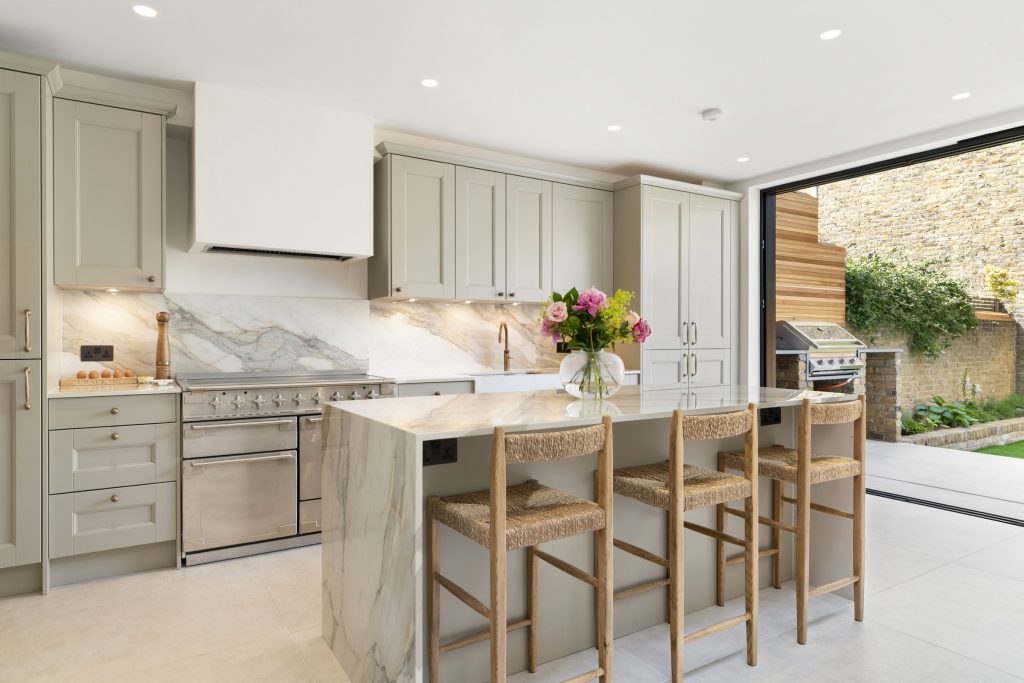
Modern shaker kitchens refine traditional shaker furniture with cleaner proportions and more restrained detailing. The signature framed door remains, but slimmer rails and stiles, simpler centre panels and minimal beading create a more contemporary look.
Cabinet construction also shapes the style. Lay-on doors, concealed hinges and understated hardware create clean lines, while in-frame shaker cabinetry can feel equally modern when designed with finer proportions and minimal detailing.
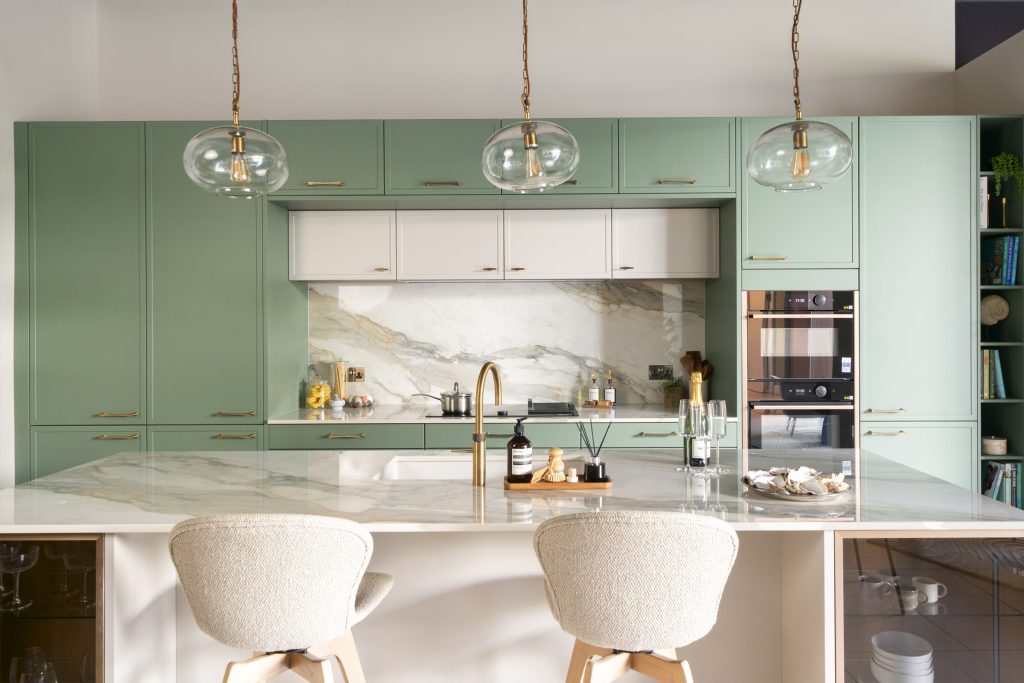
For a more architectural look, skinny shaker kitchens use an even narrower frame, often paired with integrated appliances, streamlined cabinetry and contemporary materials such as quartz or porcelain.
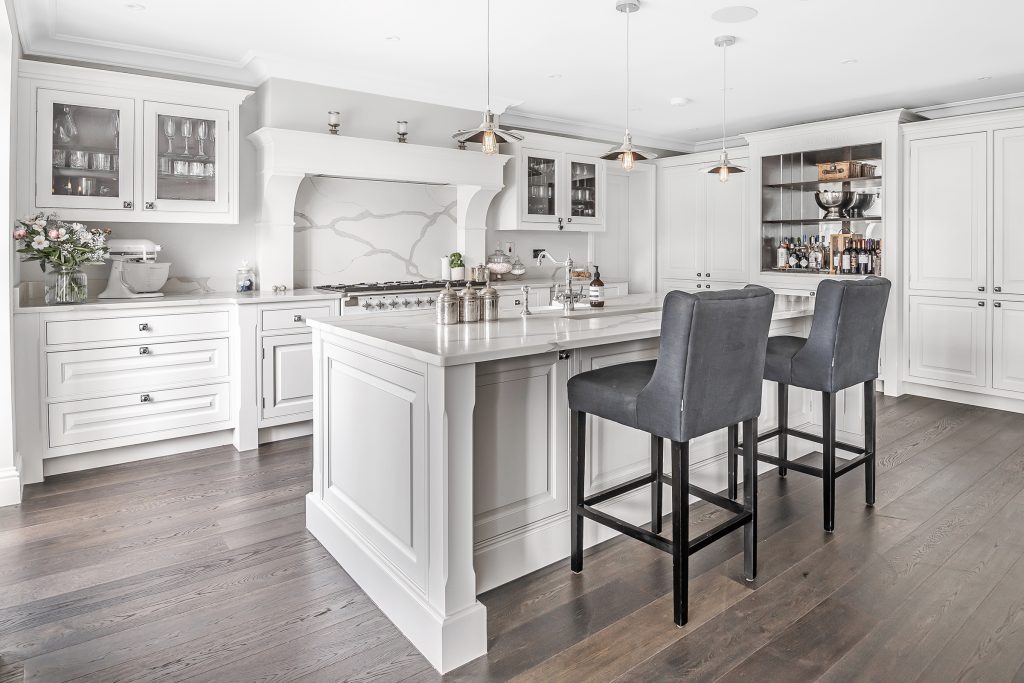
For projects requiring something more individual, bespoke shaker cabinetry offers greater freedom to respond to unusual dimensions, challenging layouts and architectural features. This can be particularly valuable in period and listed properties, where uneven walls, original features, alcoves or unconventional proportions may require furniture to be designed around the building. Cabinetry can be made to exact sizes and proportions, making considered use of the available space.
This could include specially sized cabinetry, bespoke larders and pantries, dressers, home bars and feature furniture, alongside handcrafted details such as hand carving, decorative mouldings and specialist finishes.
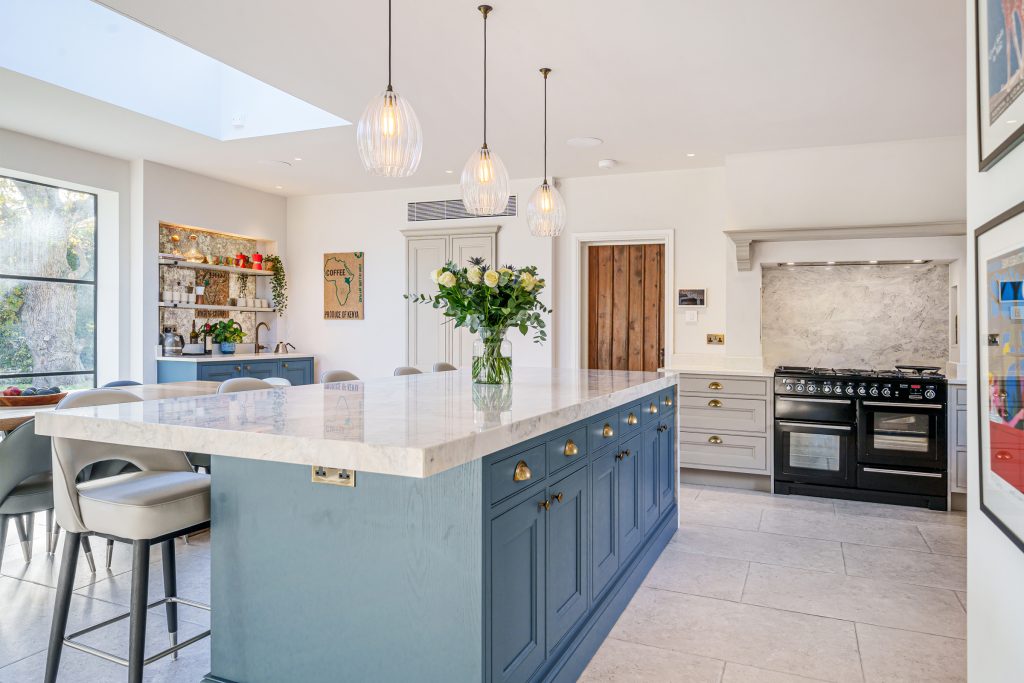
Our factory-finished shaker kitchens combine precision manufacturing with a high-quality, durable finish. Available from Mackintosh and Häcker, they offer an extensive choice of cabinetry, door styles, colours and internal storage options.
With a choice of classic framed doors to modern and skinny shaker kitchens, the breadth of choice allows us to create an individual design while benefiting from the consistency and precision of factory production.
Looking for shaker kitchen inspiration? Explore our shaker kitchen projects below, designed and installed for homes across Berkshire and the surrounding areas.
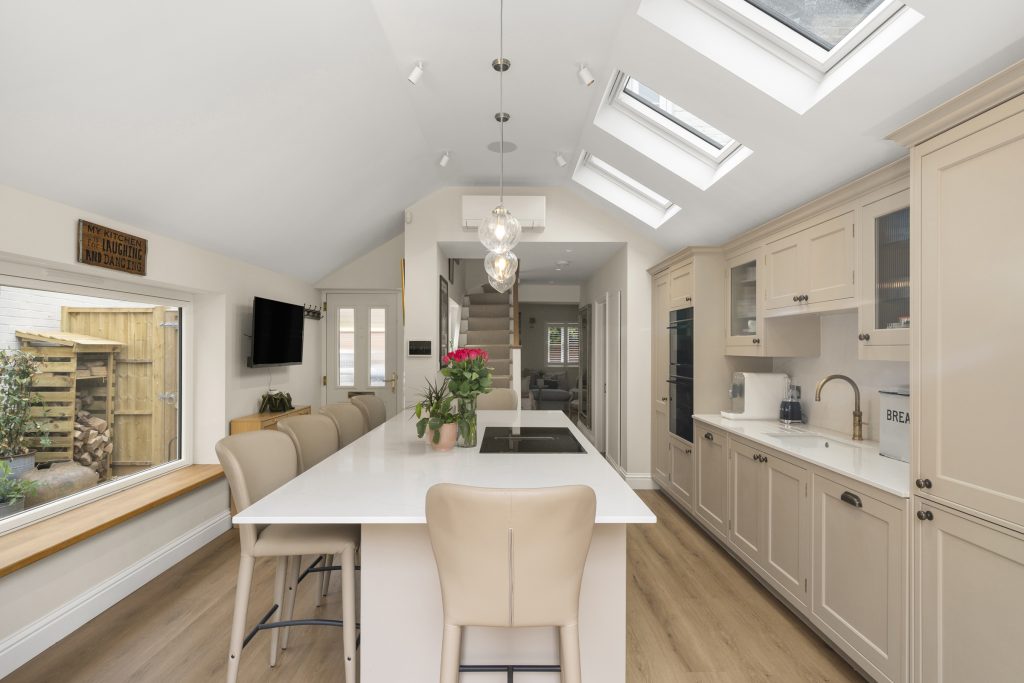
A handcrafted shaker kitchen for a complete cottage renovation by KCA.
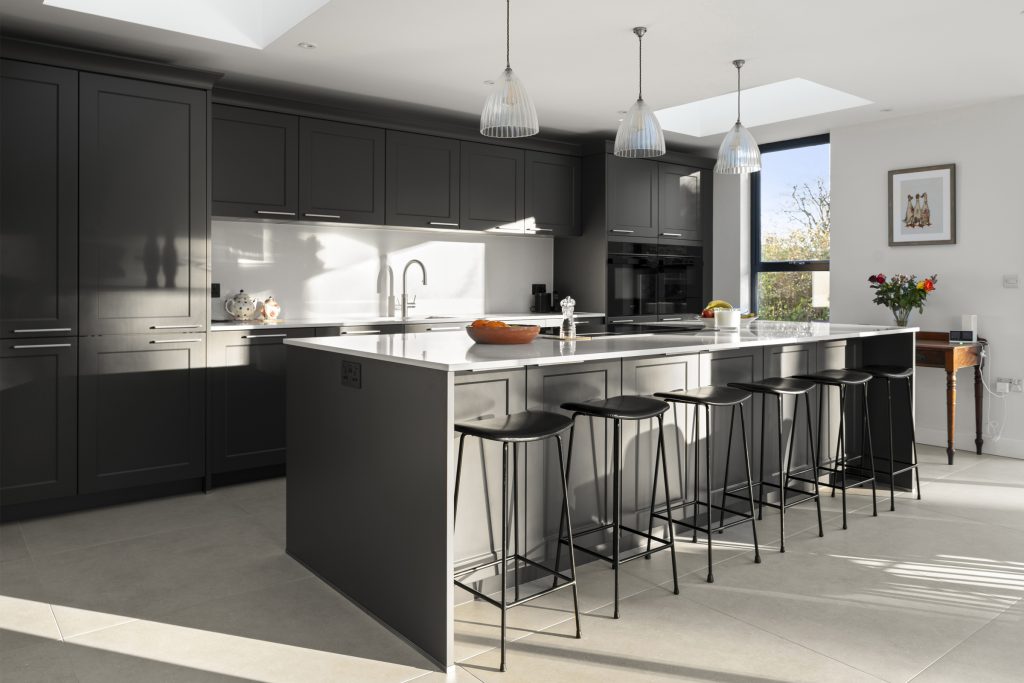
A transitional shaker kitchen that remains sympathetic to the house’s character.
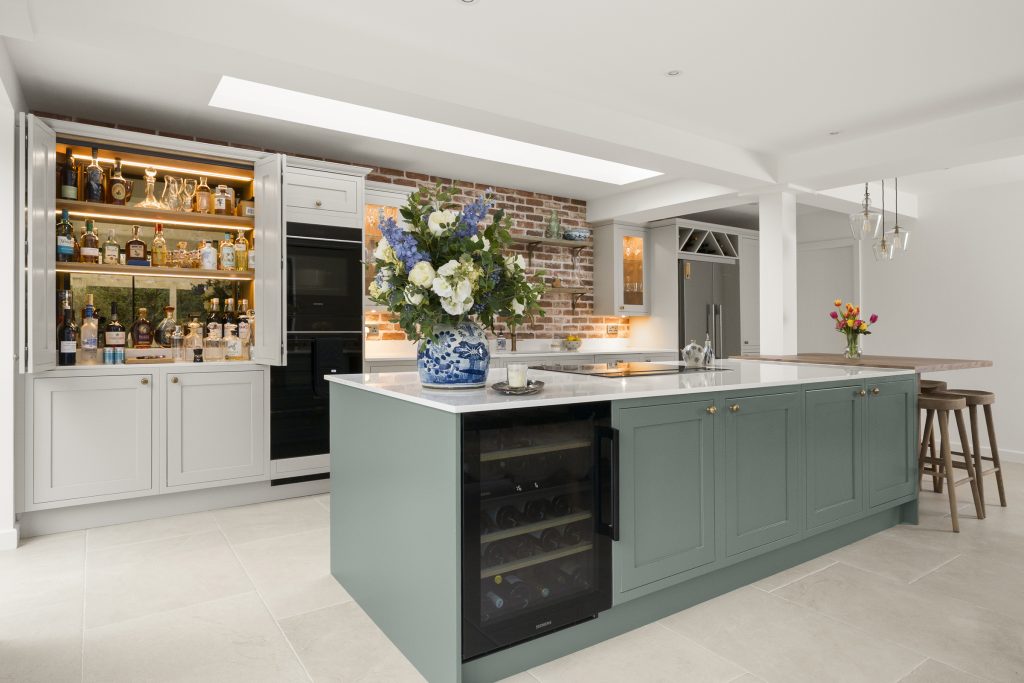
A modern in-frame Shaker kitchen with breakfast seating, bar pantry and bootility room.
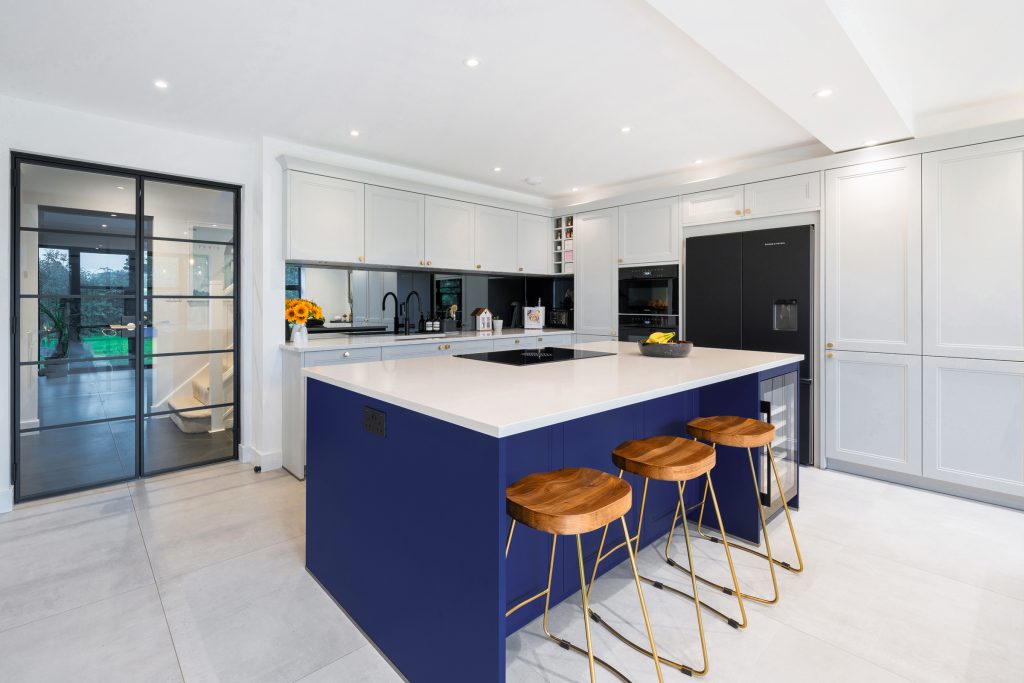
A modern take on a classic Shaker kitchen for a Thames Ditton renovation.
Looking for more examples of our kitchens? Browse our gallery of projects.
A shaker kitchen is built around simple, framed cabinetry: a recessed centre panel sits within four rails and stiles, with clean lines and little in the way of fussy detailing. It’s a look rooted in the original shaker furniture tradition, where craftsmen worked with natural materials and honest joinery, letting good proportion do the work instead of ornament.
The style has evolved considerably since then. Doors can be more ornate with stepped, multi-plane profiles, or pared right back with a slim, “skinny shaker” frame for a more contemporary edge. Construction varies too: in-frame kitchens, where the door sits within a solid wood frame with visible hinges, sit at the traditional, premium end, while overlay kitchens, where the door sits in front of the carcass with hinges concealed, are more typical of mass-market ranges. Some shaker kitchens are entirely hand-crafted, cut and finished by hand in a workshop, while others are machine-manufactured on a larger, more automated scale.
Yes. Shaker kitchens have stayed popular because the design itself is simple and adaptable rather than tied to a passing trend. The core cabinetry, the recessed panel, the clean frame, doesn’t rely on decoration to look good, so it doesn’t date the way more ornate or heavily styled kitchens can.
That’s also what makes shaker kitchens so versatile. Colours, worktops, handles and hardware can all move with the times, while the underlying cabinetry keeps its character. It’s a style that works equally well in a period cottage, a new-build, or a contemporary bespoke kitchen, which is a big part of why it remains one of the most requested styles in kitchen design today
A modern shaker kitchen combines the characteristic framed shaker door with more contemporary design choices. These might include streamlined cabinetry, bolder colours, quartz or porcelain worktops, minimal hardware, integrated appliances and architectural lighting.
It retains the character of a shaker kitchen while creating a cleaner, more contemporary overall appearance.
A skinny shaker kitchen uses a slimmer frame around the cabinet door than a conventional shaker design. This creates a finer and more minimalist appearance while retaining the subtle detailing that distinguishes shaker cabinetry from a completely flat-fronted kitchen.
Skinny shaker kitchens are particularly popular for contemporary and transitional interiors.
The principal difference is the width and proportion of the frame around the cabinet door.
A traditional shaker door generally has a broader frame, giving the cabinetry a stronger classic character. A skinny or slim shaker door uses a narrower frame, producing a more streamlined and contemporary appearance.
Both can be customised through colour, hardware and surrounding materials to create very different kitchen styles.
The cost of shaker kitchen cabinets depends more on their construction, materials and level of craftsmanship than the style itself. Factory-finished shaker kitchens can offer a more accessible price point, while handcrafted, in-frame or bespoke Shaker cabinetry are a higher investment due to the materials, joinery and level of customisation involved.
At KCA, we offer both factory-finished and bespoke shaker kitchens, allowing the specification to be tailored to your project, priorities and budget.
Neutral shaker kitchens remain a timeless option, but greens, blues and deeper shades can create a more distinctive scheme. Two-tone kitchens are also popular, particularly where a contrasting colour is used for the kitchen island or a bank of feature cabinetry.
Your KCA designer can help select colours in relation to the natural light, architecture and wider interior palette of your home.
In-frame means the cabinet door sits within a visible frame, with the hinges visible on the outside. It’s the more traditional, premium construction method and is often found on bespoke and higher-end kitchens. Lay-on means the door sits in front of the cabinet carcass, with no visible frame and the hinges hidden inside. Lay-on shaker kitchens have a more modern aesthetic, so they’re a great choice for a more contemporary look. Both use a shaker door profile; the difference is in how the cabinet itself is built.
Shaker kitchens work with almost any handle style, which is part of their appeal. Classic cup handles and bar handles both sit well against the recessed panel and keep the traditional look. Knobs suit a more country or period-style kitchen, while slim, dark metal bar handles give a shaker kitchen a more contemporary edge.
Handleless shaker doors, using a routed edge or integrated pull, are also increasingly popular for a cleaner, more modern finish. The right choice usually comes down to the overall style you’re seeking, rather than the cabinet style itself.
Shaker kitchens are generally low maintenance. For painted finishes, a soft cloth with warm water and mild soap is usually enough, avoiding abrasive cleaners that can dull the paintwork over time. Solid wood doors should be wiped dry after cleaning to avoid moisture damage, and occasional light waxing or oiling can help protect the finish depending on the wood. The recessed panel and frame can collect dust in the grooves, so an occasional wipe with a soft brush or cloth keeps the detailing looking sharp.
Both are popular choices, and it largely comes down to budget and the look you want. Painted shaker kitchens, usually built in MDF, offer a huge range of colours and a smooth, consistent finish, and are generally more affordable. Solid wood shaker kitchens, in oak, walnut or similar, show the natural grain of the timber and tend to be more durable over time, but come at a higher price point.
Yes. Shaker’s clean lines and lack of ornamentation actually make it a good fit for smaller spaces, since the simple frame doesn’t visually clutter the room the way a more decorative door style can. Lighter painted finishes, in particular, help a small shaker kitchen feel more open. The style is flexible enough to work in a compact galley kitchen just as well as it does in a large open-plan space with an island.